Sunday, August 3, 2014

6 Health Benefits of Yerba Mate Tea


6 Health Benefits of Yerba Mate Tea

Yerba mate tea is a South American beverage made by steeping the ground leaves and stems of the yerba mate plant. Yerba mate is a central nervous system stimulant containing caffeine, but it also contains a number of other nutrients, including antioxidants, amino acids, polyphenols, vitamins and minerals. Yerba mate is touted as being a safe and effective nervous system stimulant with few side effects and many health benefits. Here are some of the benefits of drinking yerba mate tea.

1. Rich in Antioxidants

Yerba mate tea is very high in antioxidants; it's got about 90% more antioxidants than green tea. Yerba mate has significant immune boosting properties. It can slow the signs of aging, detoxify the blood and prevent many types of cancer. Yerba mate also helps reduce stress and insomnia.

2. Enhances Your Ability to Focus

Proponents of yerba mate tea say that the minerals, vitamins, antioxidants, animo acids and polphenols found in this beverage have a balancing effect on the caffeine it contains. Users report increased mental energy, clarity and focus, but they also say that yerba mate doesn't cause any of the uncomfortable side effects associated with drinking caffeinated beverages, such as headaches, stomachaches and jitters.

3. Enhances Physical Endurance

The chemical compounds and nutrients in yerba mate tea affect your metabolism to make your body use carbohydrates more efficiently. This means you'll get more energy from the food you eat. You'll also burn more of the calories your body has stored in fat cells as fuel when you drink yerba mate tea regularly. Regular yerba mate consumption also helps keep lactic acid from building up in your muscles so you can decrease post workout soreness and cut your recovery time.

4. Aids Digestion

The native peoples of South America have long used yerba mate tea as a traditional herbal remedy against digestive ailments. Yerba mate aids digestion by stimulating increased production of bile and other gastric acids. Yerba mate helps keep your colon clean for effective and efficient waste elimination, and helps reduce the stomach bacteria that can contribute to bad breath.

5. Helps You Control Your Weight

Native South American peoples have traditionally used yerba mate as part of a lifestyle that includes a healthy diet and exercise. Yerba mate has stimulant qualities to help you feel full sooner after you begin eating, and it slows your digestion so that your stomach stays full longer. Combining yerba mate with a healthy diet and regular exercise can help boost your metabolism to burn more calories, and it can help you eat less by curbing your appetite slightly.

6. Supports Cardiovascular Health

The antioxidants and amino acids present in yerba mate help fat and cholesterol move through your bloodstream so that they don't accumulate on artery walls. Yerba mate also helps prevent arteriosclerosis (hardening of the arteries) and prevents blood clots that may cause heart attack or stroke.

Source: http://www.fitday.com/fitness-articles/nutrition/healthy-eating/6-health-benefits-of-yerba-mate-tea.html

Sunday, June 15, 2014

Asparagus facts

Asparagus, its fleshy spears topped with bud-like compact heads, is often thought of as a luxury vegetable, prized for its succulent taste and tender texture. It is harvested in the spring when it is 6 to 8 inches tall. While the most common variety of asparagus is green in color, two other edible varieties are available. White asparagus, with its more delicate flavor and tender texture, is grown underground to inhibit its development of chlorophyll content, therefore creating its distinctive white coloring. It is generally found canned, although you may find it fresh in some select gourmet shops, and it is generally more expensive than the green variety since its production is more labor intensive. The other edible variety of asparagus is purple in color. It is much smaller than the green or white variety (usually just 2 to 3 inches tall) and features a fruitier flavor. It also provides benefits from phytonutrients called anthocyanins that give it its purple color. With prolonged cooking, the purple color may disappear.

Health Benefits of Asparagus

  • It is high in vitamin K and Folate
  • Eat asparagus when you are pregnant or thinking about conceiving - because of it being high in folic acid it helps prevent birth defects such as spina bifida
  • Great for your heart
  • Helps menstrual cramps with fertility problems
  • Great for your gastrointestinal tract and your colon
  • Helps menstrual cramps
  • Great food to help treat depression
  • Has been known to increase the success rate of chemo therapy
  • Is considered a diuretic which means it is a good anti-inflammatory - best for arthritis, asthma rheumatism, and even water retention…PMS
  • Help get rid of warts
  • Helps detoxify your body
  • Add more asparagus to your diet to lover cholesterol
  • Great for nursing mothers stimulating milk production
  • Has antioxidant agents - prevents the effects of aging
  • Has antifungal and antiviral qualities
  • Great for your kidneys - cleansing your body by stimulating urination and preventing kidney stones
  • Helps prevent bladder and urinary tract infections
  • Use to be used as an a aphrodisiac - increase sexual and comforting feelings
  • Helps with treating HIV
  • Helps prevent multiple sclerosis
  • Helps prevent scurvy
  • Asparagus has anti-cancer agents - especially lung cancer
  • Helps fight chronic fatigue syndrome
  • Helps fight off high blood pressure
  • If you bruise easily - eat more asparagus
  • Is considered a laxative - eat an asparagus if you have diarrhea and constipation
  • Great for your capillaries - eat more asparagus to avoid varicose veins
  • Great for your eyes preventing cataracts
  • If you are experiencing hair loss- eat more asparagus
  • Helps treat toothaches

Thursday, June 12, 2014

"The 7 Stages of Grief"


Here is the grief model we call the 7 Stages of Grief:
  1. SHOCK & DENIAL-
    You will probably react to learning of the loss with numbed disbelief. You may deny the reality of the loss at some level, in order to avoid the pain. Shock provides emotional protection from being overwhelmed all at once. This may last for weeks.
  2. PAIN & GUILT-
    As the shock wears off, it is replaced with the suffering of unbelievable pain. Although excruciating and almost unbearable, it is important that you experience the pain fully, and not hide it, avoid it or escape from it with alcohol or drugs.

    You may have guilty feelings or remorse over things you did or didn't do with your loved one. Life feels chaotic and scary during this phase.
  3. ANGER & BARGAINING-
    Frustration gives way to anger, and you may lash out and lay unwarranted blame for the death on someone else. Please try to control this, as permanent damage to your relationships may result. This is a time for the release of bottled up emotion.

    You may rail against fate, questioning "Why me?" You may also try to bargain in vain with the powers that be for a way out of your despair ("I will never drink again if you just bring him back")
  4. "DEPRESSION", REFLECTION, LONELINESS-
    Just when your friends may think you should be getting on with your life, a long period of sad reflection will likely overtake you. This is a normal stage of grief, so do not be "talked out of it" by well-meaning outsiders. Encouragement from others is not helpful to you during this stage of grieving.

    During this time, you finally realize the true magnitude of your loss, and it depresses you. You may isolate yourself on purpose, reflect on things you did with your lost one, and focus on memories of the past. You may sense feelings of emptiness or despair.

    More 7 stages of grief...
  5. THE UPWARD TURN-
    As you start to adjust to life without your dear one, your life becomes a little calmer and more organized. Your physical symptoms lessen, and your "depression" begins to lift slightly.
  6. RECONSTRUCTION & WORKING THROUGH-
    As you become more functional, your mind starts working again, and you will find yourself seeking realistic solutions to problems posed by life without your loved one. You will start to work on practical and financial problems and reconstructing yourself and your life without him or her.
  7. ACCEPTANCE & HOPE-
    During this, the last of the seven stages in this grief model, you learn to accept and deal with the reality of your situation. Acceptance does not necessarily mean instant happiness. Given the pain and turmoil you have experienced, you can never return to the carefree, untroubled YOU that existed before this tragedy. But you will find a way forward.

    You will start to look forward and actually plan things for the future. Eventually, you will be able to think about your lost loved one without pain; sadness, yes, but the wrenching pain will be gone. You will once again anticipate some good times to come, and yes, even find joy again in the experience of living.

    You have made it through the 7 stages of grief.

Sunday, June 8, 2014

The best homemade remedies to treat hay fever and seasonal allergies

NaturalNews) Homemade remedies for hay fever can quickly reduce seasonal allergy reactions, providing relief from symptoms such as runny nose, sneezing, itching, congestion and coughing. Hay fever affects the mucous membranes of the sinuses, nose, throat, eyes and palate. Grasses and plant pollens are the cause of inflammatory reactions that stimulate the immune system, and are made worse by the presence of chemicals, dust and pollutants. Research indicates that approximately 20 percent of the population suffer some form of hay fever.

Homemade remedies including treatment with herbs, homeopathy and common household ingredients provide natural antihistamines, relieve symptoms and prevent their return.

Treatment with herbs

Homemade remedies consisting of herbal recipes are often highly effective at providing allergy relief for hay fever sufferers.

Chamomile tea is reputed to relieve hay fever symptoms. Some herbalists suggest smearing chamomile and lemon oil on a tissue and inhaling to prevent hay fever symptoms.

Ginger tea and raw honey works to break up chest congestion and loosen phlegm. It strengthens the immune system and acts as a natural antihistamine.

Green tea blocks the production of histamine and is one of the best homemade remedies for building the immune system.

Peppermint tea relieves nasal and sinus congestion. Drink it cold to sooth coughing associated with hay fever and allergies.

Butterbur reduces inflammation, blocking histamines and leukotrienes. Studies suggest the herb is effective for relieving sneezing, itchy eyes, sinus congestion and headaches. People allergic to ragweed or chrysanthemum should avoid butterbur.

Homemade remedies

Old time, folk remedies are tried and true, providing relief from sneezing, congestion and itching from hay fever.

Steaming produces excellent results to break up congestion. Add a few drops of eucalyptus oil to a bowl of hot water and carefully inhale the steam. Avoid eucalyptus if you are taking homeopathic remedies as it voids their action.

Grapefruit and lemon boiled in one cup of water for 15 minutes makes an excellent home remedy for hay fever. Use only the fruit, not the rind. Cool and mix with raw honey to relieve symptoms.

Calendula liquid diluted in water makes an excellent eye wash to soothe itchy eyes. Use non-alcoholic calendula. Add a dropper full of colloidal silver to enhance the anti-microbial action and reduce inflammation.

Omega-3 fatty acids may act to lower the amounts of inflammatory chemicals produced by the body after exposure to an allergen. Although additional research is needed, it appears that a diet high in omega-3 fatty acids may help decrease the incidence of hay fever.

Homeopathic remedies

Numerous homeopathic medicines make excellent homemade remedies for hay fever symptoms.

Arundo - People needing Arundo often experience burning and itching of the palate, nose and the eyes. There may be sneezing, runny nose and loss of smell.

Wyethia - Similar to Arundo, with intolerable itching on the roof of the mouth and back of the nose into the frontal sinuses and throat indicate the need for Wyethia.

Arum Triphyllum - This remedy may relieve burning nasal discharge that creates raw sores on the skin. There may be pain at the root of the nose and the individual must breathe through the mouth due to congestion. Scabs may form high up in the nostrils, and skin of nose and lips is dry and chapped.

Sabadilla - One of the best home remedies for constant sneezing accompanied by nasal discharge and itching in the nose indicate a need for Sabadilla. There may be watery eyes and a lump in the throat indicating the need for this remedy.

Sunday, June 1, 2014

THE GREAT DICTATOR’S SPEECH TRANSCRIPT:


THE GREAT DICTATOR’S SPEECH TRANSCRIPT:

“We all want to help one another. Human beings are like that. We want to live by each other’s happiness – not by each other’s misery. We don’t want to hate and despise one another. In this world there is room for everyone. And the good earth is rich and can provide for everyone. The way of life can be free and beautiful, but we have lost the way. Greed has poisoned men’s souls, has barricaded the world with hate, has goose-stepped us into misery and bloodshed. We have developed speed, but we have shut ourselves in. Machinery that gives abundance has left us in want. Our knowledge has made us cynical. Our cleverness, hard and unkind. We think too much and feel too little. More than machinery we need humanity. More than cleverness we need kindness and gentleness. Without these qualities, life will be violent and all will be lost…. Soldiers! don’t give yourselves to brutes – men who despise you – enslave you – who regiment your lives – tell you what to do – what to think and what to feel! Who drill you – diet you – treat you like cattle, use you as cannon fodder. Don’t give yourselves to these unnatural men – machine men with machine minds and machine hearts! You are not machines! You are not cattle! You are men! You have the love of humanity in your hearts! You don’t hate! Only the unloved hate – the unloved and the unnatural! Soldiers! Don’t fight for slavery! Fight for liberty! You, the people have the power – the power to create machines. The power to create happiness! You, the people, have the power to make this life free and beautiful, to make this life a wonderful adventure.”

Wednesday, May 28, 2014

8 Surprising Ways Music Affects and Benefits our Brains


8 Surprising Ways Music Affects and Benefits our Brains


music brainI’m a big fan of music, and use it a lot when working, but I had no idea about how it really affects our brains and bodies. Since music is such a big part of our lives, I thought it would be interesting and useful to have a look at some of the ways we react to it without even realizing.
“Without music, life would be a mistake” - Friedrich Nietzsche
Of course, music affects many different areas of the brain, as you can see in the image below, so we’re only scratching the surface with this post, but let’s jump in.
brain-and-music

1. Happy/sad music affects how we see neutral faces:

We can usually pick if a piece of music is particularly happy or sad, but this isn’t just a subjective idea that comes from how it makes us feel. In fact, our brains actually respond differently to happy and sad music.
Even short pieces of happy or sad music can affect us. One study showed that after hearing a short piece of music, participants were more likely to interpret a neutral expression as happy or sad, to match the tone of the music they heard. This also happened with other facial expressions, but was most notable for those that were close to neutral.
Something else that’s really interesting about how our emotions are affected by music is that there are two kind of emotions related to music: perceived emotions and felt emotions.
This means that sometimes we can understand the emotions of a piece of music without actually feeling them, which explains why some of us find listening to sad music enjoyable, rather than depressing.
Unlike in real life situations, we don’t feel any real threat or danger when listening to music, so we can perceive the related emotions without truly feeling them—almost like vicarious emotions.

2. Ambient noise can improve creativity

We all like to pump up the tunes when we’re powering through our to-do lists, right? But when it comes to creative work, loud music may not be the best option.
It turns out that moderate noise level is the sweet spot for creativity. Even more than low noise levels, ambient noise apparently gets our creative juices flowing, and doesn’t put us off the way high levels of noise do.
The way this works is that moderate noise levels increase processing difficulty which promotes abstract processing, leading to higher creativity. In other words, when we struggle (just enough) to process things as we normally would, we resort to more creative approaches.
In high noise levels, however, our creative thinking is impaired because we’re overwhelmed and struggle to process information efficiently.
This is very similar to how temperature and lighting can affect our productivity, where paradoxically a slightly more crowded place can be beneficial.

3. Our music choices can predict our personality

Take this one with a grain of salt, because it’s only been tested on young adults (that I know of), but it’s still really interesting.
In a study of couples who spent time getting to know each other, looking at each other’s top ten favorite songs actually provided fairly reliable predictions as to the listener’s personality traits.
The study used five personality traits for the test: openness to experience, extraversion, agreeableness, conscientiousness and emotional stability.
Interestingly, some traits were more accurately predicted based on the person’s listening habits than others. For instance, openness to experience, extraversion and emotional stability were the easiest to guess correctly. Conscientiousness, on the other hand, wasn’t obvious based on musical taste.
Here is also a break-down of how the different genres correspond to our personality, according to a study conducted at Heriot-Watt University:
music and personality

To break it down, here is the connection they have found:
  • Blues fans have high self-esteem, are creative, outgoing, gentle and at ease
  • Jazz fans have high self-esteem, are creative, outgoing and at ease
  • Classical music fans have high self-esteem, are creative, introvert and at ease
  • Rap fans have high self-esteem and are outgoing
  • Opera fans have high self-esteem, are creative and gentle
  • Country and western fans are hardworking and outgoing
  • Reggae fans have high self-esteem, are creative, not hardworking, outgoing, gentle and at ease
  • Dance fans are creative and outgoing but not gentle
  • Indie fans have low self-esteem, are creative, not hard working, and not gentle
  • Bollywood fans are creative and outgoing
  • Rock/heavy metal fans have low self-esteem, are creative, not hard-working, not outgoing, gentle, and at ease
  • Chart pop fans have high self-esteem, are hardworking, outgoing and gentle, but are not creative and not at ease
  • Soul fans have high self-esteem, are creative, outgoing, gentle, and at ease
Of course, generalizing based on this study is very hard. However looking at the science of introverts and extroverts, there is some clear overlap.

4. Music can significantly distract us while driving (contrary to common belief)

Another study done on teenagers and young adults focused on how their driving is affected by music.
Drivers were tested while listening to their own choice of music, silence or “safe” music choices provided by the researchers. Of course, their own music was preferred, but it also proved to be more distracting: drivers made more mistakes and drove more aggressively when listening to their own choice of music.
Even more surprising: music provided by the researchers proved to be more beneficial than no music at all. It seems that unfamiliar, or uninteresting, music is best for safe driving.

5. Music training can significantly improve our motor and reasoning skills

We generally assume that learning a musical instrument can be beneficial for kids, but it’s actually useful in more ways than we might expect. One study showed that children who had three years or more musical instrument training performed better than those who didn’t learn an instrument in auditory discrimination abilities and fine motor skills.
nrn2152-f1
They also tested better on vocabulary and nonverbal reasoning skills, which involve understanding and analyzing visual information, such as identifying relationships, similarities and differences between shapes and patterns.
These two areas in particular are quite removed from musical training as we imagine it, so it’s fascinating to see how learning to play an instrument can help kids develop such a wide variety of important skills.
Similar research shows this correlation for exercise and motor skills in the same way, which is also fascinating.

6. Classical music can improve visual attention

It’s not just kids that can benefit from musical training or exposure. Stroke patients in one small study showed improved visual attention while listening to classical music.
The study also tried white noise and silence to compare the results, and found that, like the driving study mentioned earlier, silence resulted in the worst scores.
Because this study was so small, the conclusions need to be explored further for validation, but I find it really interesting how music and noise can affect our other senses and abilities—in this case, vision.

7. One-sided phone calls are more distracting than normal conversations

Another study focused on noise, rather than music, showed that when it comes to being distracted by the conversations of others, phone calls where we can only hear one side of the conversation are the worst offenders.
After a survey showed that up to 82% of people find overhearing cellphone conversations annoying, Veronica Galván, a cognitive psychologist at the University of San Diego, decided to study why these are such a pain.
In the study, participants completed word puzzles while one half of them overheard one side of a mundane phone conversation in the background. The other half of the volunteers heard the entire conversation as it took place between two people in the room.
Those who heard the one-sided phone conversation found it more distracting than those who heard both people speaking. They also remembered more of the conversation, showing that it had grabbed their attention more than those who heard both sides and didn’t remember as much of the discussion.
The unpredictability of a one-sided conversation seems to be the cause of it grabbing our attention more. Hearing both sides of a conversation, on the other hand, gives us more context which makes it easier to tune out the distraction.
Then again, as we’ve explored before, getting distracted is often not such a bad things for various reasons.

8. Music helps us exercise

Back to music again, and we can see that just like silence doesn’t help us to be more creative or better drivers, it’s not much use when we’re exercising, either.
Research on the effects of music during exercise has been done for years. In 1911, an American researcher, Leonard Ayres, found that cyclists pedaled faster while listening to music than they did in silence.
This happens because listening to music can drown out our brain’s cries of fatigue. As our body realizes we’re tired and wants to stop exercising, it sends signals to the brain to stop for a break. Listening to music competes for our brain’s attention, and can help us to override those signals of fatigue, though this is mostly beneficial for low- and moderate-intensity exercise. During high-intensity exercise, music isn’t as powerful at pulling our brain’s attention away from the pain of the workout.
Not only can we push through the pain to exercise longer and harder when we listen to music, but it can actually help us to use our energy more efficiently. A 2012 study showed that cyclists who listened to music required 7% less oxygen to do the same work as those who cycled in silence.
Some recent research has shown that there’s a ceiling effect on music at around 145 bpm, where anything higher doesn’t seem to add much motivation, so keep that in mind when choosing your workout playlist. Here is how this breaks down for different genres:
Screen Shot 2013-11-20 at 8.29.58 AM

Now if we team up these different “tempos” with the actual work-out we’re doing, we can be in much better sync and find the right beat for our exercise. If you match up the above with the graphic below it should be super easy to get into a good groove:
Screen Shot 2013-11-20 at 8.30.17 AM
So in the same way that exercising makes us happier, it’s not surprising that music adds significantly to our work-out success.

Song of the Day


Paramore - Ain't It Fun

I don't mind
Letting you down easy but just give it time
If you don't hurt now then just wait, just wait a while
You're not the big fish in the pond no more
You are what they're feeding on
So what are you gonna do
When the world don't orbit around you?
So what are you gonna do
When the world don't orbit around you?
Ain't it fun?
Living in the real world
Ain't it good?
Being all alone
Where you're from,
You might be the one who's running things
Where you could ring anybody's bell and get what you want
You see its easy to ignore trouble
When you're living in your bubble
So what are you gonna do
When the world don't orbit around you?
So what are you gonna do
When nobody wants to fool with you?
Ain't it fun?
Living in the real world
Ain't it good?
Being all alone
Ain't it good to be on your own?
Ain't it fun, you can't count on no one
Ain't it good to be on your own?
Ain't it fun, you can't count on no one
Ain't it fun?
Living in the real world
Don't go crying to your mama
Cause you're on your own in the real world
Don't go crying to your mama
Cause you're on your own in the real world
Don't go crying to your mama
Cause you're on your own in the real world
Don't go crying to your mama
Cause you're on your own in the real world
Ain't it fun? Ain't it fun? Baby, now you're one of us
Ain't it fun? Ain't it fun? Ain't it fun?
Ain't it fun?
Living in the real world
Ain't it good? Ain't it good?
Being all alone
Ain't it fun?
Living in the real world (Cause the world don't orbit around you)
Ain't it good? Ain't it good?
Being all alone
Don't go crying to your mama (To your mama)
Cause you're on your own in the real world (Don't go crying)
Don't go crying to your mama (To your mama)
Cause you're on your own in the real world
Don't go crying to your mama
Cause you're on your own in the real world (This is the real world)
Don't go crying to your mama
'Cause you're on your own in the real world (This is the real world, this is the real world)
Don't go crying to your mama (Don't go crying)
'Cause you're on your own in the real world
Don't go crying to your mama
'Cause you're on your own in the real world
Don't go crying (Don't you go, don't you go crying)
Don't go crying (You're on your own)
Don't go crying (Don't go crying to your mother)
Don't go crying
Songwriters
WILLIAMS, HAYLEY / YORK, TAYLOR
Published by
Lyrics © Warner/Chappell Music, Inc.

Tuesday, May 27, 2014

The power of determination (true story) - Motivation


The power of determination (true story)

by Stephen on August 29, 2012
A true story about athlete Glenn Cunningham who was horribly burned in a schoolhouse fire at the age of 8. Doctors predicted he would never walk again. Determined to walk, Glenn would throw himself off his wheelchair and pull his body across the yard and along a fence. Twenty-two months later, he took his first steps and through sheer determination, learned to run despite the pain…

The little country schoolhouse was heated by an old-fashioned, pot-bellied coal stove. A little boy had the job of coming to school early each day to start the fire and warm the room before his teacher and his classmates arrived.
One morning they arrived to find the schoolhouse engulfed in flames. They dragged the unconscious little boy out of the flaming building more dead than alive. He had major burns over the lower half of his body and was taken to a nearby county hospital.
From his bed the dreadfully burned, semi-conscious little boy faintly heard the doctor talking to his mother. The doctor told his mother that her son would surely die – which was for the best, really – for the terrible fire had devastated the lower half of his body.
But the brave boy didn’t want to die. He made up his mind that he would survive. Somehow, to the amazement of the physician, he did survive. When the mortal danger was past, he again heard the doctor and his mother speaking quietly. The mother was told that since the fire had destroyed so much flesh in the lower part of his body, it would almost be better if he had died, since he was doomed to be a lifetime cripple with no use at all of his lower limbs.
Once more the brave boy made up his mind. He would not be a cripple. He would walk. But unfortunately from the waist down, he had no motor ability. His thin legs just dangled there, all but lifeless.
Ultimately he was released from the hospital. Every day his mother would massage his little legs, but there was no feeling, no control, nothing. Yet his determination that he would walk was as strong as ever.
When he wasn’t in bed, he was confined to a wheelchair. One sunny day his mother wheeled him out into the yard to get some fresh air. This day, instead of sitting there, he threw himself from the chair. He pulled himself across the grass, dragging his legs behind him.
He worked his way to the white picket fence bordering their lot. With great effort, he raised himself up on the fence. Then, stake by stake, he began dragging himself along the fence, resolved that he would walk. He started to do this every day until he wore a smooth path all around the yard beside the fence. There was nothing he wanted more than to develop life in those legs.
Ultimately through his daily massages, his iron persistence and his resolute determination, he did develop the ability to stand up, then to walk haltingly, then to walk by himself – and then – to run.
He began to walk to school, then to run to school, to run for the sheer joy of running. Later in college he made the track team.
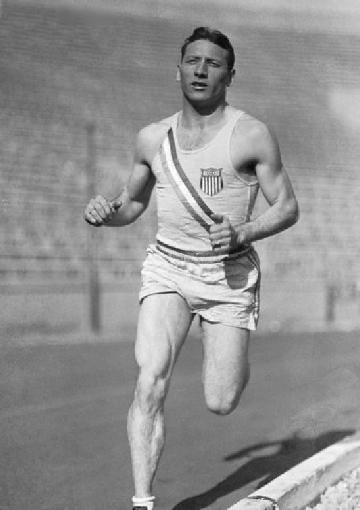
Still later in Madison Square Garden this young man who was not expected to survive, who would surely never walk, who could never hope to run – this determined young man, Dr. Glenn Cunningham, ran the world’s fastest mile**!
Story Told By Burt Dubin,
Developer of Speaking Success System.
**On June 16, 1934, Glenn Cunningham ran the mile in 4:06.8 minutes, breaking the world’s record. His effort portrays that whatever you want to create in your life is yours for the making. As long as you desire it enough and allow your will to guide you, you can have and be whatever your heart desires. The only one that can put limits on our personal will is ourselves. Develop and encourage your will to create and all the forces of nature within and without will help you bring your desire to pass.

Life Summary:

  • 8 years old, was horribly burned in a schoolhouse fire. Doctors predicted he would never walk again.
  • 22 months later, took his first steps and through sheer determination, learned to run despite the pain.
  • In high school, set records for the mile and later attended Kansas University.
  • While at Kansas, refused all scholarship money, preferring to pay his own way.
  • By sophomore year, ran the 1,500 meter race at the 1932 Olympics, but finished fourth due to a severe cold.
  • By senior year, set a world record for the mile of 4:06.8 and held seven of the top 13 fastest recorded times for the mile.
  • In 1936, voted “Most Popular Athlete” by his fellow athletes.
  • He went on to earn a master’s degree from University of Iowa and later a doctorate from New York University.
  • While in New York, won 21 of 31 races at Madison Square Gardens and set an indoor mile record there in 1938.  His fastest mile time was 4:04.4 at a Dartmouth track meet in 1938.
  • When the 1940 Olympics were cancelled, he retired from his running career and taught at Cornell College in Iowa.
  • During World War II, he served two years in the Navy.
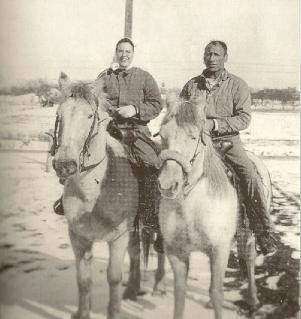
  • Spent the remainder of his life running the Glenn Cunningham Youth Ranch for troubled kids in Kansas, USA.  It is estimated that he and his wife raised around 9,000 kids on their ranch in the years until his death in 1988.

Glenn Cunningham Images:

Cunningham at 1936 Games.

Glenn Cunningham and Wife at Their Range.

source: Glenn Gunningham

The Five Secrets to Being A Special Education Teacher And Still Love Your Job

thinkinclusive 
The job of a special education teacher is not an easy one, and additional pressures from budget cuts, new school initiatives, and professional development can be overwhelming. One of our favorite special education teachers, Tim Villegas, shares how he manages to stay positive and connected to kids and families in NICHCY’s latest guest blog.
——————

Do you want to know the secrets to working in Special Education and still love your job? Read on…

If you are reading this… it probably means that there is still hope for you. Perhaps you are young and not yet jaded by the persistent thumb of the public education system pressed firmly on your back. Perhaps you are an optimist, who tries to see the silver lining in everything. Or perhaps you have already figured out the secrets to working in a job that has little pay, little respect, and little support. Here my five secrets to being a special education teacher who still absolutely loves it.

1. Understand that it is not about YOU.

We did not enter into a career in education to become millionaires… In fact, the only people that are really making money in this industry are the test makers (I don’t know that for sure…just venting a little). So… if you did not do it for the money… why are you a special education teacher? I know it was not JUST because teachers have the summer off! How many of us work Extended School Year (ESY), plan and dream about the following school year during the summer?
We do what we do because we love to work with kids. We do what we do because we enjoy people (or at least I hope we do). When we realize that it is not really about US… it’s about what we can do for other people, our kiddos, our paraprofessionals, our co-teachers, and fellow staff… we can let go of trying to make our situation perfect for us. Being a teacher is a collaborative profession… which brings me to the next secret.
Back to top

2. Realize you are not alone.

There are approximately 3.9 million teachers (including public and private) in the United States. Whether they are special education teachers or not… each one of them has a stake in education as a whole and has an interest in making it better. It can be easy to feel isolated especially if you are special education teacher in a small district. Perhaps you feel alienated by the school staff. You are a vital part of your school community, even if you don’t think you are. Know that there are thousands of teachers… just like you… who are struggling to do the same thing.
Back to top

3. Develop your Personal Learning Network (PLN).

Are you on Facebook? No? Go get an account… I can wait…
Are you on Twitter? No? Really? Okay… I can spare a minute…
Are you on Linkedin? Okay… now this may take some time.
These three social media outlets are VITAL to establishing your leaning community. I understand that this requires you to be somewhat tech savvy… but guess what, folks. Technology is a huge part of the shift in education. If we do not get on board with technology, we are going to be left out in the dust. For more information on how to manage your digital life, you can check out my previous post —>> here.
The big point here is to connect with people who are interested in the same things and then read, watch, and do.
Back to top

4. Have high expectations for yourself and your students.

Nothing irks me more than hearing a teacher say, “Tthey are never going to get anything out of that!” or “So-and-so should have never been placed in (insert LRE placement here)…they should have been in (insert more restrictive placement) all along!”
Have some respect for your students that they can learn and will learn when given the correct supports. It is too easy to place the blame on someone else for why a student is in your classroom. Believe that you CAN teach any student! You are a special education teacher for a reason… you want to help realize a student’s potential. If you don’t know how to do it… there are ways to figure it out. Don’t give up on your student or yourself. You will become a better person and a better teacher for it. Where there is a will, there is a way.
Back to top

5. Make friends with General Education Teachers and then collaborate with them.

Okay… this is really the silver bullet. If you are Special Education Teacher and you sit alone in your classroom during your lunch and planning period…. you are missing out on the richness of developing relationships within the school community. Once I opened up myself to know and befriend other teachers who did not teach my kiddos… I saw a whole other world. Sometimes it is easy to segregate ourselves from our school staff, and then, when we don’t feel included or are not invited to things, we point the finger at them.
Something that has transformed my teaching is to collaborate with general education teachers on lessons that my class and their class can do together. This way…,it is not just about integrating special needs students and typical students…,it is about designing lessons so that EVERYONE can participate and get something meaningful out of it. No longer can we use the excuse… “Well… they won’t get anything out if this.” They WILL because we can set it up for our kids to be successful.
If we apply these secrets to our education practice… I promise you will love your job. In fact… you may even want to start a blog to write about it. It happened to me.
http://www.thinkinclusive.us

Understanding Dysgraphia


Note: This fact sheet about dysgraphia is published by the International Dyslexia Association (IDA). IDA encourages the reproduction and distribution of fact sheets. If portions of the text are cited, appropriate reference must be made. Fact sheets may not be reprinted for the purpose of resale.
What is dysgraphia?
Dysgraphia is a specific learning disability that affects how easily children acquire written language and how well they use written language to express their thoughts.
Dysgraphia is a Greek word. The base word graph refers both to the hand’s function in writing and to the letters formed by the hand. The prefix dys indicates that there is impairment. Graph refers to producing letter forms by hand. The suffix ia refers to having a condition. Thus, dysgraphia is the condition of impaired letter writing by hand, that is, disabled handwriting and sometimes spelling. Impaired handwriting can interfere with learning to spell words in writing. Occasionally, but not very often, children have just spelling problems and not handwriting or reading problems.
What causes dysgraphia?
Research to date has shown orthographic coding in working memory is related to handwriting. Orthographic coding refers to the ability to store unfamiliar written words in working memory while the letters in the word are analyzed during word learning or the ability to create permanent memory of written words linked to their pronunciation and meaning. Children with dysgraphia do not have primary developmental motor disorder, another cause of poor handwriting, but they may have difficulty planning sequential finger movements such as the touching of the thumb to successive fingers on the same hand.
Does dysgraphia occur alone or with other specific learning disabilities?
Children with impaired handwriting may also have attention-deficit disorder (ADHD)—inattentive, hyperactive, or combined inattentive and hyperactive subtypes. Children with this kind of dysgraphia may respond to a combination of explicit handwriting instruction plus stimulant medication, but appropriate diagnosis of ADHD by a qualified professional and monitoring of response to both instruction and medication are needed
Dysgraphia may occur alone or with dyslexia (impaired reading disability) or with oral and written language learning disability (OWL LD, also referred to as selective language impairment, SLI).
Dyslexia is a disorder that includes poor word reading, word decoding, oral reading fluency, and spelling. Children with dyslexia may have impaired orthographic and phonological coding and rapid automatic naming and switching. Phonological coding refers to coding sounds in spoken words in working memory. Phonological coding is necessary for developing phonological awareness—analyzing the sounds in spoken words that correspond to alphabet letters. If children have both dysgraphia and dyslexia, they may also have difficulty in planning sequential finger movements.
OWL LD (SLI) are disorders of language (morphology—word parts that mark meaning and grammar; syntax—structures for ordering words and understanding word functions; finding words in memory, and/or making inferences that go beyond what is stated in text). These disorders affect spoken as well as written language. Children with these language disorders may also exhibit the same writing and reading and related disorders as children with dysgraphia or dyslexia.
Why is the diagnosis of dysgraphia and related learning disabilities important?
Without diagnosis, children may not receive early intervention or specialized instruction in all the relevant skills that are interfering with their learning of written language. Considering that many schools do not have systematic instructional programs in handwriting and spelling, it is important to assess whether children need explicit, systematic instruction in handwriting and spelling in addition to word reading and decoding. Many schools offer accommodations in testing and teaching to students with dysgraphia, but these students also need ongoing, explicit instruction in handwriting, spelling, and composition. It is also important to determine if a child with dysgraphia may also have dyslexia and require special help with reading or OWL LD (SLI) and need special help with oral as well as written language. .
What kinds of instructional activities improve the handwriting of children with dysgraphia?
Initially, children with impaired handwriting benefit from activities that support learning to form letters:
  • playing with clay to strengthen hand muscles;
  • keeping lines within mazes to develop motor control;
  • connecting dots or dashes to create complete letter forms;
  • tracing letters with index finger or eraser end of pencil;
  • imitating the teacher modeling sequential strokes in letter formation; and
  • copying letters from models.
Subsequently, once children learn to form legible letters, they benefit from instruction that helps them develop automatic letter writing, using the following steps to practice each of the 26 letters of the alphabet in a different order daily:
  • studying numbered arrow cues that provide a consistent plan for letter formation;
  • covering the letter with a 3 x 5 card and imaging the letter in the mind’s eye;
  • writing the letter from memory after interval that increases in duration over the handwriting lessons;
  • writing letters from dictation (spoken name to letter form); and
  • writing letters during composing for 5 minutes on a teacher-provided topic.
Students benefit from explicit instruction in spelling throughout K–12:
  • initially in high frequency Anglo-Saxon words;
  • subsequently in coordinating the phonological, orthographic, and morphological processes relevant for the spelling of longer, more complex, less frequent words; and
  • at all grade levels in the most common and important words used for the different academic domains of the curriculum.
Throughout K-12, students benefit from strategies for composing:
  • planning, generating, reviewing/evaluating, and revising compositions of different genre including narrative, informational, compare and contrast, and persuasive; and
  • self-regulation strategies for managing the complex executive functions involved in composing.
Do Children with dysgraphia make reversals or other letter production errors?
Some children do make reversals (reversing direction letter faces along a vertical axis), inversions (flipping letters along a horizontal axis so that the letter is upside down), or transpositions (sequence of letters in a word is out of order). These errors are symptoms rather than causes of handwriting problems. The automatic letter writing instruction described earlier has been shown to reduce reversals, which are less likely to occur when retrieval of letters from memory and production of letters have become automatic.
What kind of instructional strategies improve spelling of children with dysgraphia?
If children have both handwriting and spelling problems, the kinds of handwriting instruction described earlier should be included along with the spelling instruction.
Are educators in public schools identifying children with dysgraphia and providing appropriate instruction in public schools?
In general, no. Although federal law specifies written expression as one of the areas in which students with learning disabilities may be affected, it does not clearly identify the transcription problems that are the causal factors in dysgraphia—impaired handwriting and/or spelling—for impaired written expression of ideas. Some of the tests used to assess written expression are not scored for handwriting or spelling problems and mask the nature of the disability in dysgraphia. Content or ideas may not be impaired. All too often, the poor writing or failure to complete writing assignments in a timely fashion or at all is misattributed to lack of motivation, laziness, or other issues unrelated to the real culprit—dysgraphia. Children who are twice exceptional—gifted and dysgraphic—are especially under-diagnosed and underserved. Teachers mistakenly assume that if a student is bright and cannot write it is because the student is not trying.
Are there research-supported assessment tools for diagnosing dysgraphia?
Yes. See Berninger (2007a) and Milone (2007) below for assessing handwriting problems associated with dysgraphia. Also, see Berninger (2007b) and Berninger, O’Donnell, and Holdnack (2008) for using these tests and other evidence-based assessment procedures in early identification, prevention, and diagnosis for treatment planning and linking them to evidence-based handwriting and spelling instruction (also see Troia, 2008).
In summary, dysgraphia is a specific learning disability that can be diagnosed and treated. Children with dysgraphia usually have other problems such as difficulty with spelling and written expression, as well as dyslexia and, in some cases, oral language problems. It is important that a thorough assessment of handwriting and related skill areas be carried out in order to plan specialized instruction in all deficient skills that may be interfering with a student’s learning of written language. For example, a student may need instruction in both handwriting and oral language skills to improve written expression. Although early intervention is, of course, desirable, it is never too late to intervene to improve a student’s deficient skills and provide appropriate accommodations.
Note: The International Dyslexia Association (IDA) thanks Virginia W. Berninger, Ph.D., for her assistance in the preparation of this fact sheet.
References
Berninger, V. (2007a). Process Assessment of the Learner, 2nd Edition. Diagnostic for Reading and Writing (PAL-II RW). San Antonio, TX: The Psychological Corporation.
Berninger, V. (2007b). Process Assessment of the Learner II User’s Guide. San Antonio, TX: Harcourt/PsyCorp. (CD format) ISBN 0158661818. Second Edition issued August, 2008.
Berninger, V. (2007). Evidence-based written language instruction during early and middle childhood. In R. Morris & N. Mather (Eds.), Evidence-based interventions for students with learning and behavioral challenges. Philadelphia: Lawrence Erlbaum Associates.
Berninger, V., O’Donnell, L., & Holdnack, J. (2008). Research-supported differential diagnosis of specific learning disabilities and implications for instruction and response to instruction (RTI). In A. Prifitera, D.Saklofske, & L. Weiss (Eds.), WISC-IV Clinical Assessment and Intervention, Second Edition (pp. 69–108). San Diego, CA: Academic Press (Elsevier).
Berninger, V., & Wolf, B. (in press-a). Teaching students with dyslexia and dysgraphia: Lessons from teaching and science. Baltimore: Paul H. Brookes.
Berninger, V., & Wolf, B. (in press-b). Helping students with dyslexia and dysgraphia make connections: Differentiated instruction lesson plans in reading and writing. Baltimore: Paul H. Brookes. [Spiral-bound book with teaching plans from University of Washington Research Program.]
Graham, S., Harris, K., & Loynachan, C. (1994). The spelling for writing list. Journal of Learning Disabilities, 27, 210–214.
Henry, M. (2003). Unlocking literacy. Effective decoding and spelling instruction. Baltimore: Paul H. Brookes Publishing.
Milone, M. (2007). Test of Handwriting Skills-Revised. Novato, CA: Academic Therapy. Distributed by ProEd, Austin, TX.
Moats, L. C. (Winter, 2005/2006). How spelling supports reading: And why it is more regular and predictable than you think. American Educator, 12–22, 42–43.
Troia, G. (Ed.). (2008). Instruction and assessment for struggling writers: Evidence-based practices. New York: Guilford.
Yates, C., Berninger, V., & Abbott, R. (1994). Writing problems in intellectually gifted children. Journal for the Education of the Gifted, 18, 131–155.
© Copyright 2009, The International Dyslexia Association (IDA). Published by the IDA Information Services Committee. IDA encourages the reproduction and distribution of this fact sheet. If portions of the text are cited, appropriate reference must be made.
Fact sheets may not be reprinted for the purpose of resale. Fact sheet revised December 2008.
URL: http://www.interdys.org/ewebeditpro5/upload/Understanding_Dysgraphia_Fact_Sheet_12-01-08.pdf

What Is Dysgraphia?

Dysgraphia is a learning disability that affects writing, which requires a complex set of motor and information processing skills. Dysgraphia makes the act of writing difficult. It can lead to problems with spelling, poor handwriting and putting thoughts on paper. People with dysgraphia can have trouble organizing letters, numbers and words on a line or page. This can result partly from:
  • Visual-spatial difficulties: trouble processing what the eye sees
  • Language processing difficulty: trouble processing and making sense of what the ear hears
As with all learning disabilities (LD), dysgraphia is a lifelong challenge, although how it manifests may change over time. A student with this disorder can benefit from specific accommodations in the learning environment. Extra practice learning the skills required to be an accomplished writer can also help.

What Are the Warning Signs of Dysgraphia?

Just having bad handwriting doesn’t mean a person has dysgraphia. Since dysgraphia is a processing disorder, difficulties can change throughout a lifetime. However since writing is a developmental process—children learn the motor skills needed to write, while learning the thinking skills needed to communicate on paper—difficulties can also overlap.

Dysgraphia: Warning Signs By Age

Young Children

Trouble With:
  • Tight, awkward pencil grip and body position
  • Avoiding writing or drawing tasks
  • Trouble forming letter shapes
  • Inconsistent spacing between letters or words
  • Poor understanding of uppercase and lowercase letters
  • Inability to write or draw in a line or within margins
  • Tiring quickly while writing

School-Age Children

Trouble With:
  • Illegible handwriting
  • Mixture of cursive and print writing
  • Saying words out loud while writing
  • Concentrating so hard on writing that comprehension of what's written is missed
  • Trouble thinking of words to write
  • Omitting or not finishing words in sentences

Teenagers and Adults

Trouble With:
  • Trouble organizing thoughts on paper
  • Trouble keeping track of thoughts already written down
  • Difficulty with syntax structure and grammar
  • Large gap between written ideas and understanding demonstrated through speech

What Strategies Can Help?

There are many ways to help a person with dysgraphia achieve success. Generally strategies fall into three main categories:
  • Accommodations: providing alternatives to written expression
  • Modifications: changing expectations or tasks to minimize or avoid the area of weakness
  • Remediation: providing instruction for improving handwriting and writing skills
Each type of strategy should be considered when planning instruction and support. A person with dysgraphia will benefit from help from both specialists and those who are closest to the person. Finding the most beneficial type of support is a process of trying different ideas and openly exchanging thoughts on what works best.
Although teachers and employers are required by law to make “reasonable accommodations” for individuals with learning disabilities, they may not be aware of how to help. Speak to them about dysgraphia and explain the challenges faced as a result of this learning disability.
Here are examples of how to teach individuals with dysgraphia to overcome some of their difficulties with written expression.

Early Writers

Be patient and positive, encourage practice and praise effort. Becoming a good writer takes time and practice.
  • Use paper with raised lines for a sensory guide to staying within the lines.
  • Try different pens and pencils to find one that’s most comfortable.
  • Practice writing letters and numbers in the air with big arm movements to improve motor memory of these important shapes. Also practice letters and numbers with smaller hand or finger motions.
  • Encourage proper grip, posture and paper positioning for writing. It’s important to reinforce this early as it’s difficult for students to unlearn bad habits later on.
  • Use multi-sensory techniques for learning letters, shapes and numbers. For example, speaking through motor sequences, such as “b” is “big stick down, circle away from my body.”
  • Introduce a word processor on a computer early; however do not eliminate handwriting for the child. While typing can make it easier to write by alleviating the frustration of forming letters, handwriting is a vital part of a person's ability to function in the world.

Young Students

Encourage practice through low-stress opportunities for writing. This might include writing letters or in a diary, making household lists, or keeping track of sports teams.
  • Allow use of print or cursive—whichever is more comfortable.
  • Use large graph paper for math calculation to keep columns and rows organized.
  • Allow extra time for writing assignments.
  • Begin writing assignments creatively with drawing, or speaking ideas into a tape recorder.
  • Alternate focus of writing assignments—put the emphasis on some for neatness and spelling, others for grammar or organization of ideas.
  • Explicitly teach different types of writing—expository and personal essays, short stories, poems, etc.
  • Do not judge timed assignments on neatness and spelling.
  • Have students proofread work after a delay—it’s easier to see mistakes after a break.
  • Help students create a checklist for editing work—spelling, neatness, grammar, syntax, clear progression of ideas, etc.
  • Encourage use of a spell checker—speaking spell checkers are available for handwritten work.
  • Reduce amount of copying; instead, focus on writing original answers and ideas.
  • Have student complete tasks in small steps instead of all at once.
  • Find alternative means of assessing knowledge, such as oral reports or visual projects.

Teenagers and Adults

Many of these tips can be used by all age groups. It is never too early or too late to reinforce the skills needed to be a good writer.
  • Provide tape recorders to supplement note taking and to prepare for writing assignments.
  • Create a step-by-step plan that breaks writing assignments into small tasks (see below).
  • When organizing writing projects, create a list of keywords that will be useful.
  • Provide clear, constructive feedback on the quality of work, explaining both the strengths and weaknesses of the project, commenting on the structure as well as the information that is included.
  • Use assistive technology such as voice-activated software if the mechanical aspects of writing remain a major hurdle.
  • How to Approach Writing Assignments

  • Plan your paper (Pull together your ideas and consider how you want them in your writing.)
  • Organize your thoughts and ideas.
  • Create an outline or graphic organizer to be sure you’ve included all your ideas.
  • Make a list of key thoughts and words you will want to use in your paper.
  1. Write a draft

    This first draft should focus on getting your ideas on paper—don’t worry about making spelling or grammar errors. Using a computer is helpful because it will be easier to edit later on.
  2. Edit your work

    • Check your work for proper spelling, grammar and syntax; use a spell checker if necessary.
    • Edit your paper to elaborate and enhance content—a thesaurus is helpful for finding different ways to make your point.
  3. Revise your work, producing a final draft

    • Rewrite your work into a final draft.
    • Be sure to read it one last time before submitting it.
For more on dysgraphia, check out these 10 dysgraphia resources.

This article is made possible by a grant from the American Legion Child Welfare Foundation.
Source: www.ncld.org
  •  

Monday, May 19, 2014

12 Foods to Eat for Energy

Do you ever find yourself dozing off after lunch or reaching for a candy bar to get you through your four o’clock meeting? The hours of sleep you clocked the night before may not be the only reason you’re sagging on certain days. The types and the amount of food you eat play an important role in your daily energy levels. In fact, did you know that foods high in fat and calories can leave you feeling fatigued, since they require more energy to digest? To stay alert all day, start by making smarter choices about what you’re using to fuel your body. Below, find 12 power foods that’ll give a powerful boost to your daily diet.
Carbohydrates
Carbs have gotten a bad reputation in recent years, but before you swear off bread for life, it’s important to note that not all carbohydrates are created equal. Carbohydrates offer fuel to the body in the form of glucose, which is the best energy source for the brain and central nervous system—two vital body systems. A diet rich in whole grains and complex carbohydrates is necessary for energy; find these in fruits and vegetables such as sweet potatoes and foods made with whole wheat.


Brown Rice: Rich in manganese, the mineral that helps produce energy from protein and carbs, it will help you maintain high energy all day. A versatile ingredient, brown rice can be served as a side dish with your favorite lean proteins (along with nutrient-packed veggies!) for a powerhouse lunch or dinner.


Sweet Potato: High in carbohydrates and loaded with beta-carotene (vitamin A) and vitamin C, these will help fight off midday fatigue. Bonus: Kids will love this sweet treat at mealtime. Try them mashed or cut into strips, tossed with a little oil and and baked for a healthier alternative to french fries.


Honey: A spoonful of honey is nature’s equivalent of an energy drink. Low on the glycemic index, this natural sweetener acts as a time-released muscle fuel during exercise and helps replenish muscles post-workout. Add a sweet drizzle to anything from breakfast yogurt to afternoon tea.

Fruits
Fruit offers a significant dose of glucose, which your body can easily metabolize into energy. Most fruits can be digested in under half an hour, which makes them a quick, nutritious way to get a burst of energy.


Bananas: Because they are composed mostly of sugars (glucose, fructose and sucrose) and fiber, bananas are a foolproof energy food. Top them with peanut or almond butter for a well-rounded snack, or slice one into your morning cereal for an extra boost that will keep you going until lunchtime.


Apples: Not only will an apple a day keep the doctor away, it’ll also give you a powerful jolt of energy. High in fiber, apples take longer to digest, so they’ll give you a more prolonged lift than many other fruit picks. Snack on apples with cheese for an especially effective pick-me-up.


Oranges: High in vitamin C, potassium and folate, this citrus fruit rations out energy steadily over time instead of giving you a quick sugar rush. Peel and eat an orange whole to benefit from the pectin and fiber in the fruit’s membranes.

Food derived from plants
Foods that come straight from a tree or plant will help you maintain energy levels. Certain veggies have all the protein, carbs and good fats you need to keep you going all day. Plus, some nuts, such as almonds, are alkaline-forming—if you include them in your diet, they won’t zap your energy like acid-producing foods, but will instead help to regulate your protein intake.


Spinach: An excellent source of iron, a key component of energy production in the body. Eat a spinach salad for lunch and you probably won’t experience that afternoon energy slump.


Beans: Both a protein and a complex carb, they’re a must for both carnivores and vegetarians. Toss a cup into of a spinach salad or enjoy a bean burrito.


Almonds: Packed with protein, manganese, copper and riboflavin, almonds are a handy snack to keep at your desk or in your bag. Copper and manganese play an essential role in keeping energy flowing throughout the body by neutralizing toxins within cells. Riboflavin aids oxygen-based energy production.

High proteins
Protein is an essential energy food—particularly when you’re trying to drop a few pounds. If you are, replace part of your regular carbohydrate intake with proteins; this will help ensure that your muscle mass remains constant as your body metabolizes fat cells as a source of energy.


Salmon: Salmon has been receiving a lot of hype lately for its high content of omega-3 fatty acids, which can lower cholesterol and reduce your risk of heart disease. But this pink fish also contains protein and vitamin B6, niacin and riboflavin—all of which help convert the food you eat into energy. Top a spinach salad with salmon, or serve it with a side of brown rice and veggies for a power-packed lunch or dinner.


Yogurt: With a rainbow of flavors to choose from, yogurt is a healthy breakfast or snack option when you’re on the go. Rich in magnesium, which is crucial for the release of energy, yogurt also adds a dose of calcium to your diet. Enjoy it post-workout to help replenish your glycogen sources.


Eggs: Containing the highest complete form of protein in any food (a whopping 97% of it can be absorbed by your body!), eggs provide 30% of your daily value of protein. All of the essential amino acids that your body uses to rebuild muscle can also be found in eggs. Whether you eat them boiled, scrambled, baked, fried or as an omelet, don’t overlook the power of the incredible egg.

Source: Women's Day

7 Health Benefits Nutmeg Provides


Known as a popular spice around the world, nutmeg is also popular for its many health benefits. In fact, since ancient times, nutmeg has been used as a remedy for various ailments or to improve health in general. Here are some of the health benefits that nutmeg provides.
1. Brain Tonic
During ancient times, Roman and Greek civilizations used nutmeg as a type of brain tonic. This is because nutmeg can effectively stimulate your brain. As a result, it can help eliminate fatigue and stress. If you are suffering from anxiety or depression, nutmeg may also be a good remedy. Nutmeg can also improve your concentration so you can become more efficient and focused at work or at school.
2. Pain Relief
Nutmeg is also an effective sedative. In fact, nutmeg is a staple in ancient Chinese medicine. The Chinese used the spice to treat inflammation and abdominal pain. Use nutmeg if you are suffering from aching joints, muscle pain, arthritis, sores and other ailments. To relieve the pain, apply nutmeg oil to the affected areas.
3. Indigestion Relief
If you suffer from digestion-related problems like diarrhea, constipation, bloating, flatulence and so on, nutmeg can effectively offer you relief. Nutmeg oil relieves stomachaches by removing the excess gas from your intestines. Nutmeg can also boost your appetite.
4. Bad Breath Treatment
Because of its antibacterial properties, nutmeg can also effectively treat halitosis or bad breath. As you probably know, bad breath is usually caused by a build-up of bacteria in your mouth. Nutmeg can rid your mouth of these bacteria. This is the reason why nutmeg is a common ingredient in many brands of toothpastes. Nutmeg can also be used to treat gum problems and toothaches.
5. Liver and Kidney Detox
Detoxification is an important factor of good health. Diet, pollution, stress, tobacco, medication and other external substances can lead to the build-up of toxins in your organs. The liver and kidney are two of the organs where this toxic build-up usually develops. As a tonic, nutmeg can clean your liver and kidney and remove these toxins. If you are suffering from a liver disease then nutmeg can also be beneficial. Nutmeg is also effective in preventing and dissolving kidney stones. When your liver and kidney are successfully detoxified, they can perform their function better.
6. Skin Care
If skin care is one of your priorities then you might want to incorporate nutmeg into your regimen. Nutmeg can actually help you achieve smoother and healthier skin by helping you treat several skin problems. A scrub made from nutmeg powder and orange lentil powder can help you remove blackheads, a type of acne characterized by pores clogged with excess oil and dead skin cells. If you suffer from acne marks, nutmeg can also help make your scars less noticeable. What you need to do is mix some nutmeg powder with some honey to make a paste, which you will then apply to the acne marks.
7. Sleep Aid
If you have difficulty sleeping at night, drink a cup of milk with some nutmeg powder. This will help you achieve relaxation and will induce sleep.

Source:Fit Day